
Published on:
Why the Amazon tipping point is now a balance-sheet question
KEA Research Team
Research team
15 min read
The finding
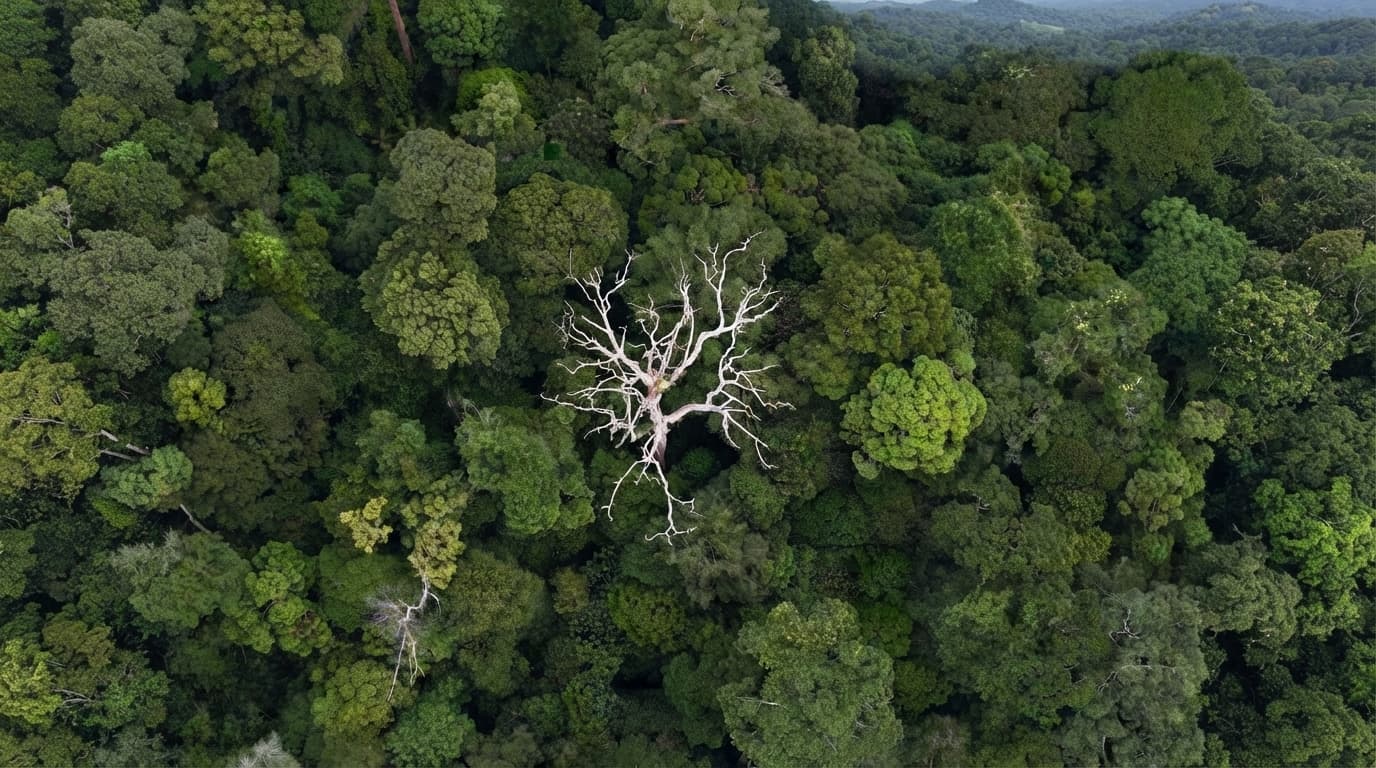
At the time of publication, roughly 17% of the Amazon basin had already been deforested, approaching 20% in the Brazilian Amazon specifically. In our 2019 paper, Thomas Lovejoy and I estimated that somewhere between 20% and 25% cumulative deforestation, combined with a warming climate, could flip large parts of the basin from rainforest into a drier, savanna-like state. Once triggered, that shift would not reverse on any timescale a business plans around.
“The tipping point is here, it is now.”
Why this is a balance-sheet question, not just an environmental one
A basin-wide shift in rainfall and hydrology does not stay inside the deforested plot that caused it. It changes water availability for mining operations and data centers sited hundreds of kilometers away, it changes yield assumptions for soy and cattle operations that depend on the "flying rivers" the forest itself generates, and it changes the physical-risk premise that financing and insurance for any asset in the region are priced against. A regulator, lender or insurer asking about Amazon exposure is, increasingly, asking about this.
The exposure is concentrated, not diffuse. A relatively small set of commodities and industries, cattle, soy, timber, mining and, increasingly, data center siting, account for most of the region's land-use footprint, and most of the companies now facing EUDR-style traceability requirements or No Net Loss commitments are the same companies whose supply sheds sit inside the basin this threshold describes. The tipping-point question and the compliance question a lender or regulator is already asking are, more often than not, the same question asked two different ways.
The measurement gap the paper leaves open
Our threshold is a basin-wide estimate built from modeling and satellite-derived deforestation extent, exactly what a paper at that scale is designed to establish. A company still needs a granular, continuously updated view of its supply shed, mine site or facility footprint to understand how local conditions are changing within that wider system.
The other side of the ledger: what standing forest is worth
Risk is one half of the balance-sheet picture. The other is opportunity. The Amazon Assessment Report 2021, coordinated by the Science Panel for the Amazon, which I co-chair, put numbers behind a case conservationists had made qualitatively for years: standing forest is not only an asset to protect. With the right productive model, it can be an economic asset.
The math, chapter and verse
Chapter 30 of the report, "The New Bioeconomy in the Amazon," lays out the comparison directly: forestry-based bioeconomy systems can generate somewhere between US$500 and US$1,000 per hectare per year. The most productive cattle pasture in the region tops out around US$100 per hectare per year, a five-to-tenfold gap, on land that in many cases is already degraded rather than newly cleared.
Annual revenue potential, per hectare (Amazon Assessment Report, Chapter 30)
Reported range for forest bioeconomy systems is US$500–1,000/ha/yr; chart shows the range's midpoint against the ceiling for regional pasture. Source: "The New Bioeconomy in the Amazon," Chapter 30, Amazon Assessment Report 2021, Science Panel for the Amazon.
Why this matters for capital allocation
For anyone evaluating land use, biodiversity offset sites, or nature-based investment in the Amazon, that gap changes the framing: standing forest isn't automatically the conservative, lower-return choice against extraction. The report's case is that, done right, it can out-earn it, a different conversation with a CFO than "protect this because it's the right thing to do."
The catch
That value only shows up if the bioeconomy is actually investable: processing capacity, market access, and, critically, a way to measure and verify what's happening on the ground, continuously, not just at the point of sale. Without that layer, the numbers in a report stay numbers in a report.
Where this leaves us
Both sides of the case, risk and opportunity, return to the same measurement gap. Knowing how close a site or supply shed is to the tipping threshold, and proving that a hectare of standing forest is generating durable bioeconomy value, require continuous, site-level, auditable evidence. That is the gap KEA's monitoring work and Moonshot sensor network are designed to close: translating basin-scale science into decisions a company can act on and finance.
Related insights


Request KEA updates
Leave your email and our team will follow up about updates on nature-related regulation, technology and science.

Connect with us to learn how KEA Network can help you build credible evidence for your nature commitments.