ENVIRONMENTAL LICENSING & NATURE RISK
Move data center permits forward.
Fill the exact gaps blocking site selection, environmental licensing or campus expansion. KEA combines biodiversity, water and community evidence in one decision-ready record that continues into operations.
Discuss your site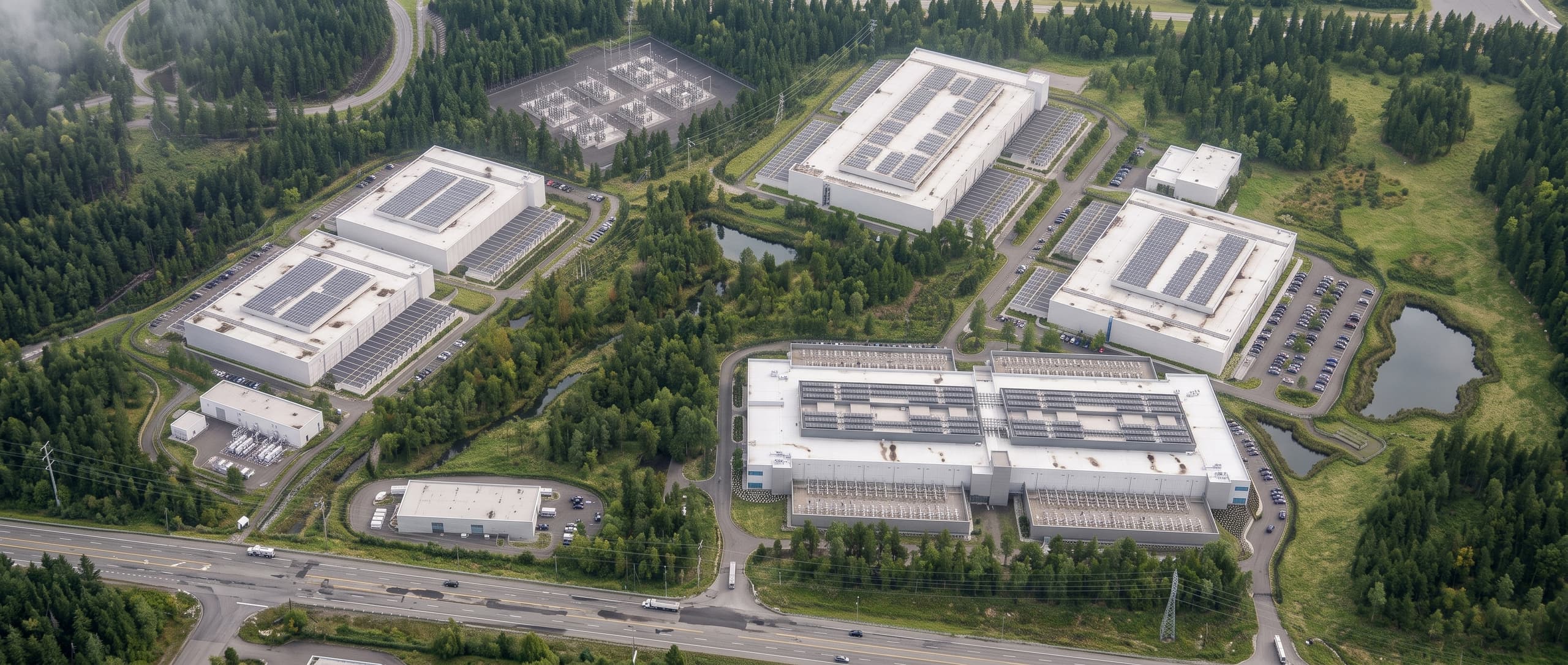

WHY THIS SOLUTION
Permitting risk is schedule risk. Water risk is siting risk.
Late water assessments, unanswered ecological questions and weak community engagement can delay a project. Addressing them during site selection gives the licensing review a stronger foundation.
Built for the local process
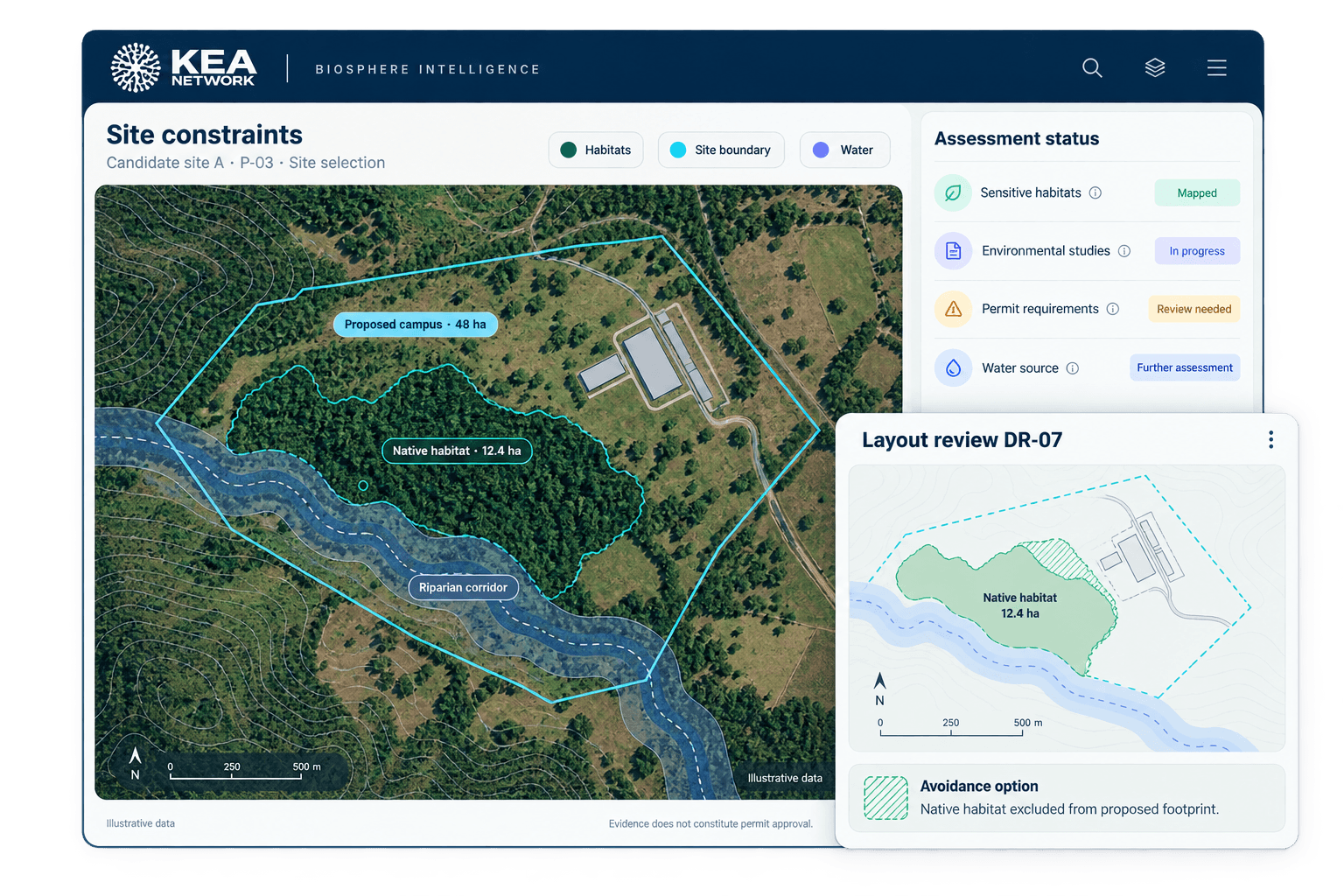
Map the competent authorities, terms of reference and separate authorizations with your permitting advisers. Connect each requirement to a study, responsible party and project dependency.
Water read as a living system
Separate water withdrawal from consumption. Assess seasonal pressures, watershed condition and downstream users alongside the source and demand studies led by your engineering team.
One evidence base, many decisions
Connect field observations and documented methods to permitting, lender diligence and corporate reporting. Identify where each decision needs additional studies rather than assuming one survey answers every question.
One method, every site you build
Use a consistent evidence structure across the portfolio, with sampling, seasonal coverage and local requirements adapted to each site.
Designed for scrutiny
Every finding is traceable to its source, method, location and reviewer. Where the evidence is thin, the system flags the gap instead of filling it with an assumption.
Your record stays yours
Your baseline, your data, your account. Renewals, expansions and new diligence cycles build on the record you already own, never restart it.
Specialists where judgment matters
Regional specialists design and review ecological studies against the agreed scope and applicable terms of reference. Coverage, seasonal limitations and unresolved findings remain visible.
01 / 02 · SITE CONSTRAINTS
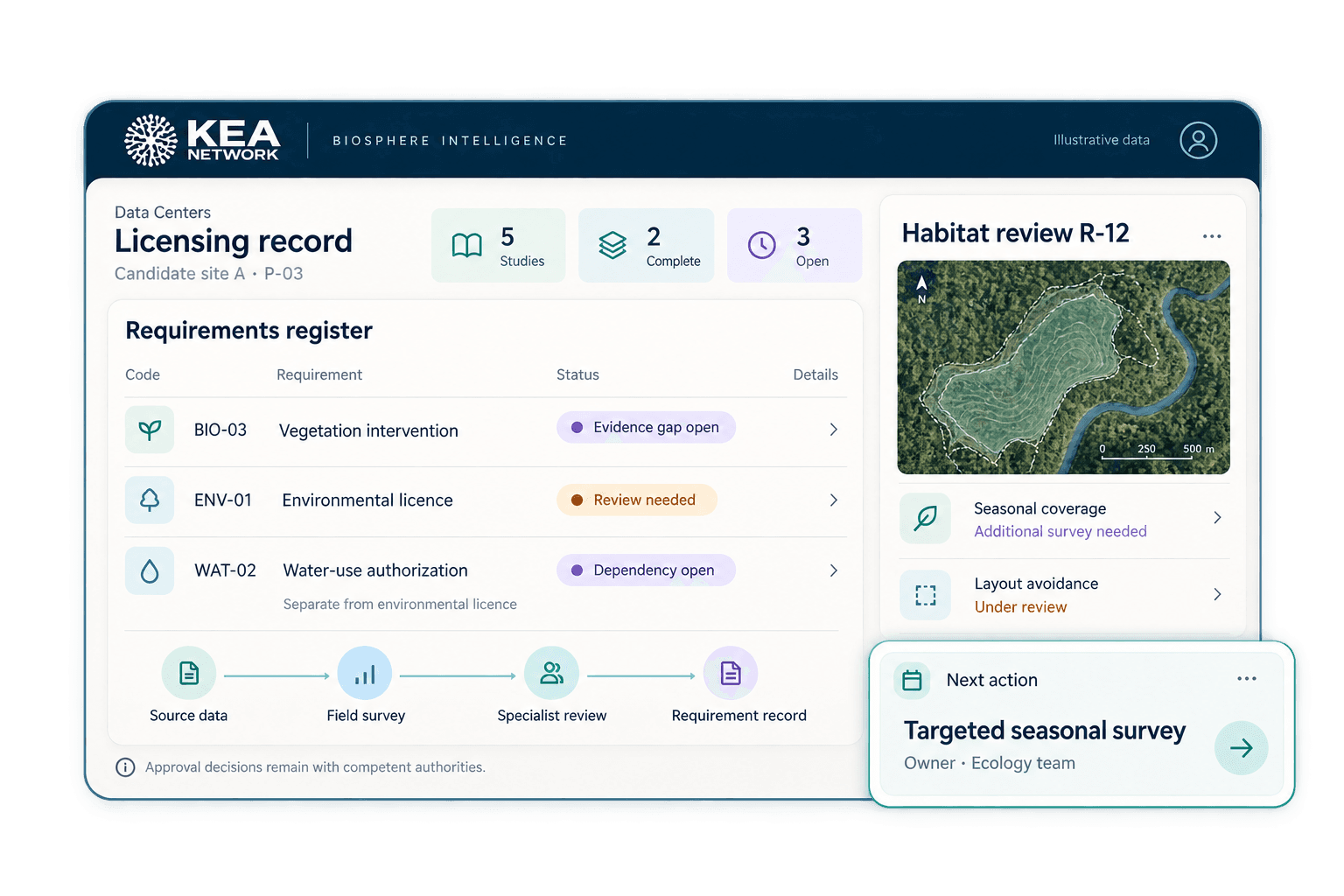
Resolve the ecological questions before they hold up a permit.
Map native habitats and riparian corridors against the proposed footprint. Record avoidance options, seasonal gaps and the studies that need local specialist review before the layout moves forward.
Illustrative site. Evidence does not constitute permit approval.
HOW WE WORK TOGETHER
An environmental program on your project schedule.
Sequence environmental work around the decisions that gate construction and operation.
Discovery
Review the licensing pathway, site constraints and disclosure commitments. Set the scope, priorities and investment.
Baseline
Document ecological and watershed conditions before construction to establish the reference for future assessments.
MRV
Measure, report and verify biodiversity, water and community indicators through construction and operation.
WATER & WATERSHED
A campus's water story starts outside the fence line.
A basin-level water-risk indicator is a screening signal. Source availability, seasonal reliability and competing uses require local evidence before a campus design can rely on them.
KEA supplies ecological and watershed evidence alongside your water engineers. Cooling design, source yield, demand forecasts and infrastructure feasibility remain specialist engineering assessments.
WHAT WE CONTRIBUTE
- Watershed screening to prioritize local source investigations
- Seasonal pressures, competing uses and ecological flow context
- Aquatic and riparian ecosystem baseline, upstream and downstream
- Receiving-environment review for discharge questions
- Distinct withdrawal and consumption records for water reporting
- Documented assumptions, data gaps and questions for local engagement
LOCAL PERMITTING & STAKEHOLDER RISK
The license is granted locally. So is the permission to keep operating.
In Brazil, Federal Law 15,190/2025, as amended, forms part of the environmental licensing framework. The applicable pathway depends on the project, location, competent authority and rules in force. EIA/RIMA requirements must be assessed for the specific project; they should not be assumed solely because it is a data center.
Water-use authorization (outorga), where required, is separate from environmental licensing. Surface-water jurisdiction and groundwater rules determine the responsible water authority. Vegetation clearance and other interventions may also require specific approvals.
KEA contributes environmental evidence and gap tracking. Your legal and permitting advisers confirm the current pathway; authorities decide approvals. Local engagement and ecological studies support that process without guaranteeing its outcome.
ENTER AT ANY STAGE
From site screen to operating campus.
For new campuses, operating sites and expansions: connect site screening, field studies and monitoring in one continuous record.
THE NETWORK
Starting where the evidence actually is.
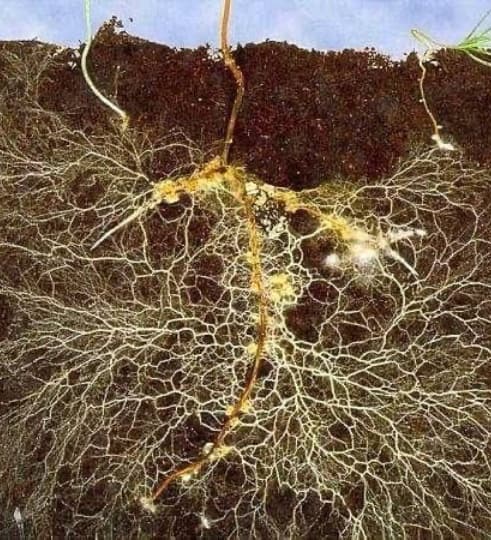
KEA's field network is curated, not assembled ad hoc for each engagement. Senior biodiversity professionals onboarded onto the platform. Local service providers for the field methods a given terms of reference calls for.
Our Latin American network connects regional ecological knowledge with a shared evidence record. Field observations and expert review help resolve questions that remote screening alone cannot answer.
Bring your location, development stage and next project decision. We will define the evidence gaps, specialist inputs and scope of work together.