
01
Commitment
The capital, targets and scope an organization announces.
Published on:
KEA Research Team
Research team
Before KEA, many of us built Pachama, the forest technology company co-founded by Diego Saez Gil. There we worked alongside some of the most ambitious buyers and investors in nature: a coalition of the world's largest technology companies, Latin America's e-commerce leader, a global commerce platform and a leading Latin American investment manager. Each came with a different goal. Each asked us, in its own way, the same thing: help us see what is happening on this land, and help us show it.
Seeing a forest is where the work begins. The value comes from proving what changed, and why, clearly enough for a sustainability team, an investment committee or an auditor to act on it. Every lesson below comes back to that idea, and each one shapes how KEA works today.
01
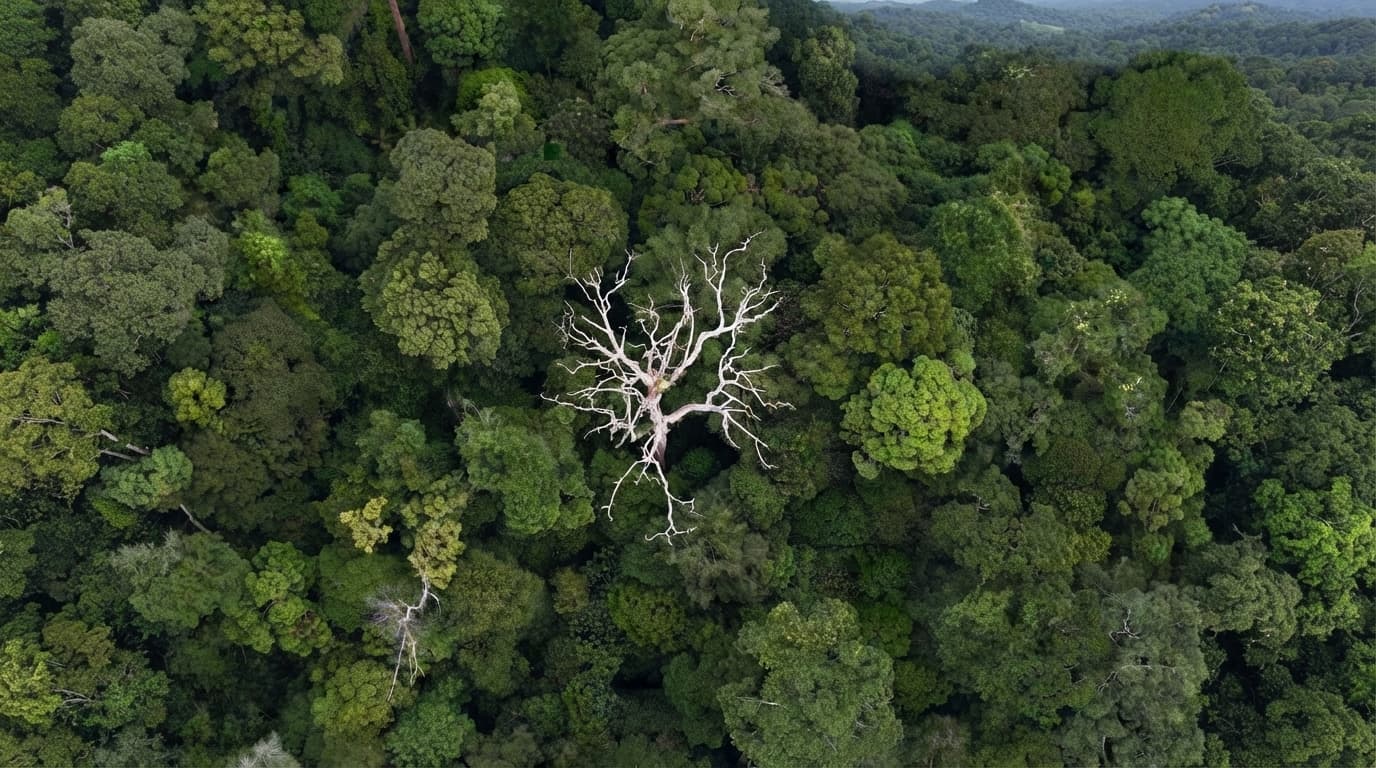
The capital, targets and scope an organization announces.
02
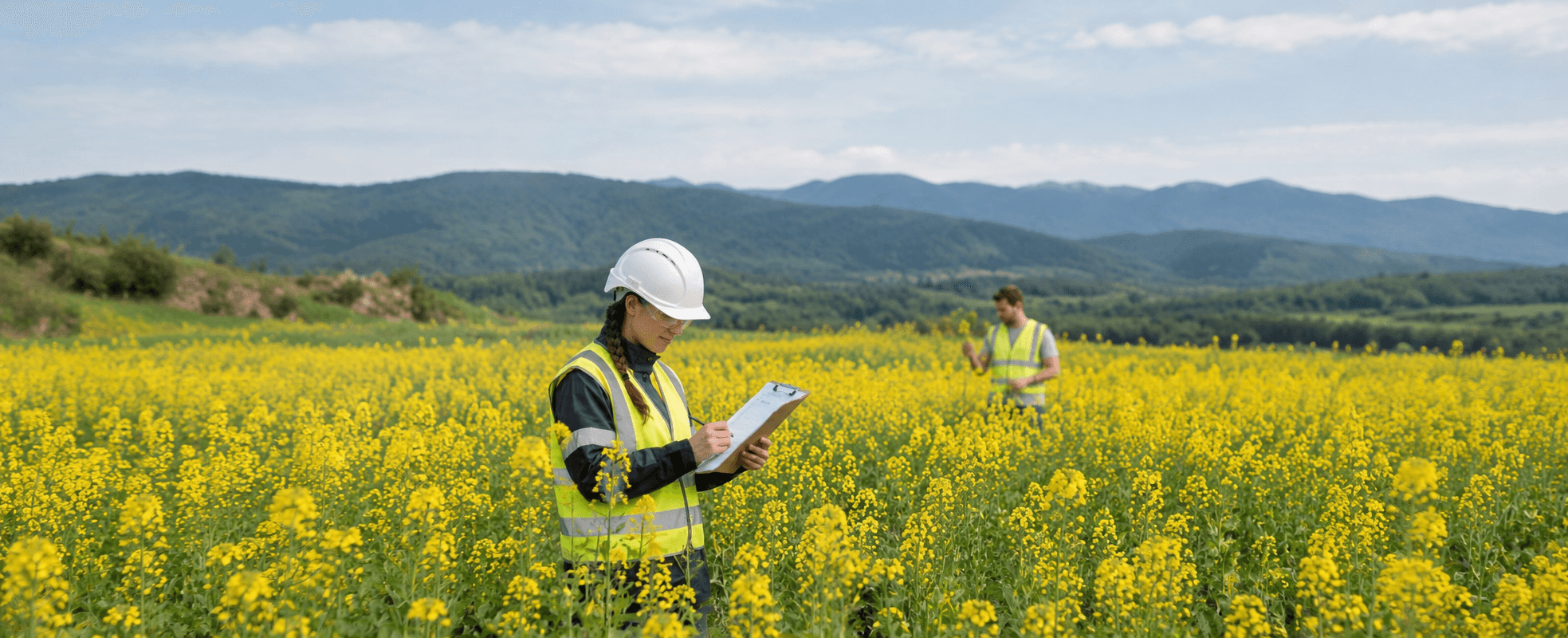
What happens on the ground: land prepared, forest protected, trees planted.
03
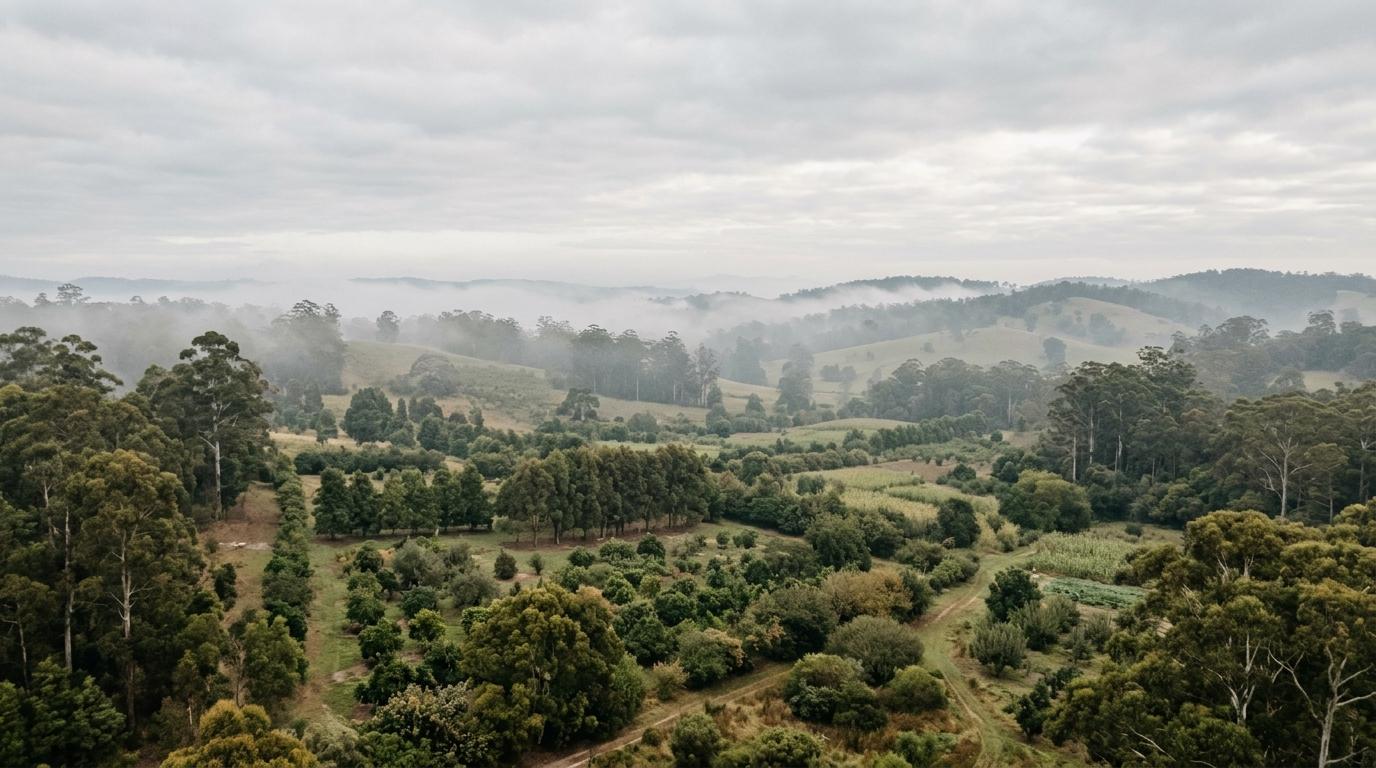
What monitoring shows over time, from orbit and in the field.
04
A traceable record that links each claim to its data and method.
Reporting each stage on its own terms keeps progress visible at every step, from the first announcement to verified change.





228
Proposals submitted to the coalition's first RFP; 185 went on to full review
As reported by the Symbiosis Coalition.
In May 2024, Google, Meta, Microsoft and Salesforce launched the Symbiosis Coalition to contract up to 20 million tonnes of high-quality, nature-based carbon removal by 2030; McKinsey is also among its members. For the coalition's first request for reforestation and agroforestry proposals, Pachama oversaw application intake and initial screening, with geospatial tools such as its Land Suitability Tool assessing land eligibility, leakage risk and baseline conditions. The coalition received 228 submissions and reviewed 185 of them in depth.
The coalition later shared what the strongest projects had in common: robust stakeholder engagement and benefit-sharing plans, and meaningful experience in their local regions. The lesson we carry: apply clear criteria the same way to every candidate from the start, then give real weight to local knowledge. Technology narrows the field quickly; people on the ground are what make a project succeed.

3,000+ ha
Atlantic Forest restoration in the first phase of Regenera América
Area of the two initial projects as reported in 2021, with satellite and AI monitoring; not a measure of completed restoration. The full program later passed 15,000 hectares restored or conserved.
In 2021, Mercado Libre chose Pachama as the strategic partner for Regenera América, its program to conserve and restore forests across the region where it operates. By 2023 the program spanned nine initiatives across Brazil and Mexico, from Curuá in the Amazon to Novas Florestas in the Atlantic Forest and Corredor Campeche in Mexico's Maya Forest. Our team connected the program with local implementing organizations and brought satellite and machine-learning monitoring into it from the first phase, which covered more than 3,000 hectares of Atlantic Forest restoration.
What made the program strong was treating each initiative as a site in its own right, with its own local partner and monitoring. That let Mercado Libre report on a regional ambition and on individual landscapes at the same time. The lesson we carry: a portfolio is managed site by site, and each stage, from commitment to observed change, deserves its own clear record.

~200 ha
Atlantic Forest restoration at Águas da Mata Atlântica, funded by Shopify in 2024
Shopify's Sustainability Fund committed US$3.37 million; the 45,000 tonnes of removal are projected over 17 years.
In April 2024, Shopify's Sustainability Fund committed US$3.37 million to Águas da Mata Atlântica, a restoration project of about 200 hectares in Brazil's Atlantic Forest developed by Pachama. The same restoration effort also appears in Mercado Libre's Regenera América portfolio: two of the region's most recognized companies backing one landscape at different stages of its recovery.
Shopify chose to fund restoration years before the forest could deliver its full benefits. That kind of early commitment rests on the project's design: where to plant, what the land looked like at the start and how progress will be followed over 17 years. The lesson we carry: when finance arrives before the forest grows, the monitoring plan is part of what the buyer is investing in.

12,000 ha
Restoration envisaged in a proposed portfolio linked to Patria Reforest Fund I
IFC disclosure, October 2025. Proposed scope, not hectares already restored or the fund's total land area.
In 2024, Patria and Pachama announced a partnership to bring large-scale reforestation investment to Latin America, starting in Brazil's Atlantic Forest. Patria led project selection and management; our team advised on forest monitoring and carbon markets, alongside local forestry operators. The strategy pairs native restoration with productive agroforestry such as coffee, cocoa and açaí, and reached its first close in June 2025. An October 2025 IFC disclosure described a proposed portfolio linked to the fund that would enable 12,000 hectares of restoration, initially focused on the Atlantic Forest. This is its intended scope, rather than a completed restoration outcome.
The questions that matter to an investment team are focused: which land qualifies, what condition it starts in, how ecological and productive goals fit together on the same farm and what will be monitored once capital is deployed. Answering them well means measuring ecological value and financial return on their own terms and keeping both visible, so neither has to stand in for the other. The lesson we carry: environmental intelligence is most valuable when it arrives at the moment of decision, in the form the decision needs.




These engagements sat within a much wider base. In 2022 Pachama named Salesforce, Microsoft, Nespresso, Airbnb and Netflix among its more than 800 customers, and Airbnb's own climate disclosure for 2023 lists credits sourced through Pachama. Amazon's Climate Pledge Fund invested in Pachama in 2020 to help it monitor and evaluate nature-based solutions, and Deutsche Telekom's venture arm, T.Capital, joined its Series B in 2023. Across buyers this different, the requests converged: show where the forest is, how it is changing and why, in a form anyone who needs to can check. The lesson we carry: evidence earns trust when the people relying on it can check it for themselves.
Each lesson became a design choice for KEA:
“Seeing the forest is where the work begins. Proving what changed, and why, is what lets people act.”
The organizations in this story set a high bar for what nature evidence should look like. That bar is the one we build to at KEA.
Every organization named here was a client, partner or investor of Pachama; none is presented as a KEA client. Figures are as publicly reported by the organizations involved. Investment and fundraising totals describe capital committed or raised, and carbon removal volumes are projections over each project's life.
Nature-related regulation, technology and science. Leave your email and our team will keep you updated.
Connect with us to learn how KEA Network can help you build credible evidence for your nature commitments.